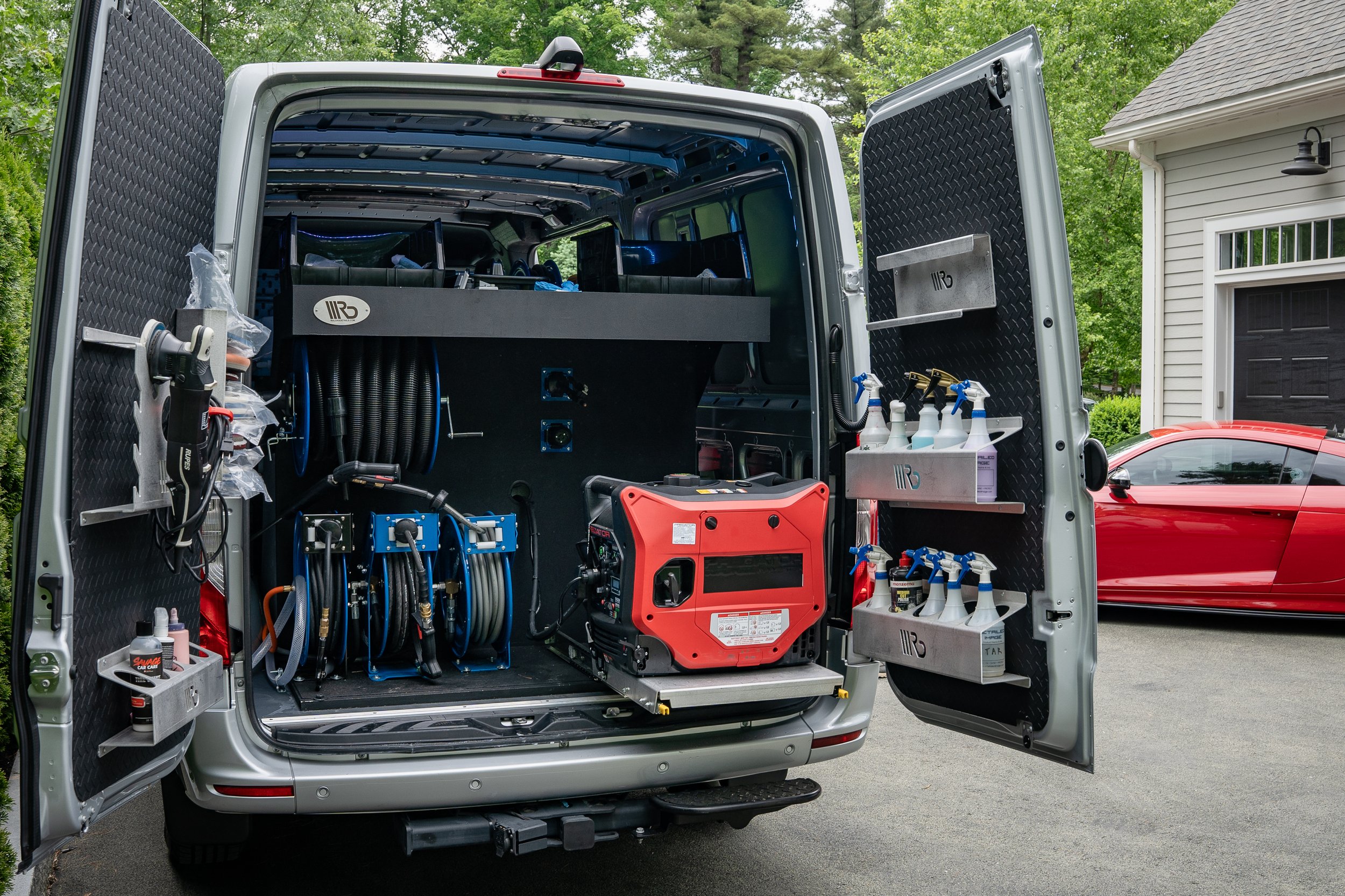
“How much for a full detail?” is the question every detailer hears first, and a flat number is usually the wrong answer. A sedan with a light interior is not the same job as a three-row SUV with pet hair and a spilled milkshake. Pricing that ignores the difference means you quietly work some jobs for free.
This guide shows how to price mobile detailing services by vehicle size, condition and add-ons, how to build a floor under every job, and how to show prices online so customers can book without a back-and-forth. It pairs with our free pricing guide for a deeper worksheet.
A note on numbers. Prices vary a lot by city, season and the quality of your work. Every figure below is an illustration of the method. Plug in your own costs and local market, not ours.
Why one flat price loses money
A flat price per service assumes every vehicle takes the same time and supplies. In detailing they don’t. Three things move the real cost of a job:
- Vehicle size. More surface area and more interior to cover.
- Condition. Heavy dirt, pet hair, stains and odors multiply the time.
- Distance. A 40-minute round trip is time you can’t bill unless you build it in.
When one price covers all of that, the easy jobs subsidize the hard ones, and you only find out when you’re tired at the end of a long week.
Build a price floor from your time
Start with the lowest price at which a job is worth taking. This is your floor, and it comes from four inputs:
- Time on the job, including setup and cleanup, in hours.
- Travel time, because the drive is unpaid work unless the price covers it.
- Your target pay per hour, which should cover your own wage, not just the job.
- Supplies and overhead: chemicals, towels, water, insurance, software and payment fees.
In plain terms: price = (hours of work + hours of travel) × your hourly rate + supplies, divided by what’s left after overhead. The calculator below does the math with your numbers.
Price by vehicle type, not by guesswork
Group vehicles into a few size categories and set a price for each. Fewer categories are easier to explain, and more categories are fairer. Most menus land on four to six.
| Group | Typical examples | How the job differs |
|---|---|---|
| Small | Coupes, compact sedans | Baseline time and supplies. |
| Mid-size | Sedans, small SUVs and crossovers | A bit more surface and interior. |
| Large | Full-size SUVs, minivans, crew-cab trucks | Third row, larger panels, more cargo space. |
| Extra large | Long-bed duallys, passenger vans, oversized SUVs | Significantly more of everything. |
| Specialty | Sprinter and cargo vans, box trucks, RVs, boats | Often quoted by scope, since interiors and surfaces vary widely. |
Price each tier from your floor, not from a competitor’s menu. Then check that the step between tiers matches the extra time. If large vehicles take 40% longer, the price should reflect most of that.
Online, the customer should pick their vehicle and see the right price automatically. That’s how online booking with vehicle-based pricing works, and it removes the first round of “what do you charge for my truck?” texts.
Charge for condition honestly
Condition is where most detailers lose money, because it’s awkward to bring up. Put it on the menu so it feels like a normal part of pricing and not an argument.
| Condition | Why it costs more | How to handle it |
|---|---|---|
| Pet hair | Takes a lot of extra time with specialized tools. | Add-on or tiered fee, priced by amount. |
| Heavy stains and spills | Extraction and repeated passes. | Per-area add-on, or “starting at” with photo approval. |
| Excess mud, sand or salt | Extra rinsing, more product, more labor. | Condition surcharge on the base service. |
| Odor treatment | Separate process and curing time. | Stand-alone add-on. |
| Neglected for years | May need two passes or a different service. | Ask for photos before quoting, and recommend a deeper package. |
Do this: Add a photo upload or a quick “how dirty is it?” question to your booking flow. Customers who see the question understand why the price may change, and you avoid surprises at the driveway.
Add-ons are where the ticket grows
A customer who has already decided to book is the best moment to offer more. Add-ons raise the average job without needing a new customer. A few that fit naturally:
- Pet hair removal, odor treatment, engine bay cleaning
- Clay bar and paint decontamination, sealant or wax upgrades
- Headlight restoration, leather conditioning, fabric protection
- Ceramic coating tiers for customers who want longer protection
Two rules keep add-ons from feeling pushy. Show them as checkboxes during booking, not a sales pitch. And leave out any add-on already included in the package, so the list stays short and clear. In our packages setup, the upgrade list hides services the base package already covers for that vehicle type.
Good, better, best
Three packages beat ten. A simple ladder helps customers choose without asking you to decide for them:
- Maintenance: the quick, repeatable service for customers who already keep their car clean.
- Full detail: the main seller, with the most popular inclusions.
- Premium: the top tier with extras or protection, anchoring how the others feel.
Name what is in each one in a sentence or two. Packages with vague names generate questions, and questions cost time.
Travel, minimums and service area
Mobile work has a cost that shops don’t: the drive. Choose one approach and apply it consistently.
- A set service area with no travel fee inside it.
- A travel fee beyond a distance or zone.
- A minimum job price so a small service in a far location still pays for the trip.
State it on your booking page. Your Google Business Profile service area should match the places you actually serve.
Find your price floor
Use the calculator with your own numbers to see the lowest price that still pays you properly.
Your price-floor calculator
Illustrative planning tool. Defaults are examples, not recommended prices. Include your own pay, supplies, fuel and fees.
A floor is the lowest price worth taking, not the price you should charge. Your market, your reputation and your results set the real number.
With the example numbers, a three-hour job plus a 40-minute round trip, a $40 hourly target, $15 in supplies and 10% overhead comes out near $180. That is a sample of the method, not a price to copy. If your market charges less than your floor, the answer is usually to change the job (shorter, tighter service area, different mix), not to work for less.
When and how to raise prices
- Check after ten jobs. Compare what you charged with how long each job took. If any type consistently runs over, adjust that tier.
- Raise for new customers first. Existing customers can move to the new price on a set date with notice.
- Watch your calendar. If you’re booked out for weeks, your price is probably low for demand.
- Don’t discount to fill a slot. Offer a small add-on instead, so the price stays intact.
Set your prices once and let the page quote them. Add vehicle types, packages and upgrades to your free booking page and customers see the right price before they book. Get started free →
Common questions
How much should I charge for mobile detailing?
It depends on your market and costs, so build your price from your own numbers. Add the hours on the job and the travel, multiply by the hourly pay you need, add supplies, and allow for overhead. That gives a floor to price above.
How do I price different vehicle sizes?
Group vehicles into four to six size tiers and price each from your time and supplies. Make sure the step between tiers reflects the extra work, and let your booking page show the right price once the customer selects their vehicle.
Should I charge extra for pet hair or a very dirty car?
Yes. Treat them as add-ons or condition surcharges, show them on your menu, and ask for photos before quoting heavy jobs so the price is agreed before you arrive.
Should I charge a travel fee for mobile detailing?
Many mobile detailers either set a service area with no travel fee inside it or add a fee or minimum job price beyond a certain distance. Choose one approach, publish it and apply it every time.
How often should I raise my detailing prices?
Review after every ten or so jobs. If a service regularly takes longer than priced or your calendar stays full for weeks, it is a good sign to raise that tier, starting with new customers.